Part 2: The Biomechanics of Slip-and-Fall Incidents in Public Transit Environments
February 27, 2026
February 27, 2026

Slips, trips, and falls are among the most frequently reported injury claims on public transit, often leading to complex liability disputes. However, it is essential to determine the true cause of a fall. In some cases, a fall is due to the presence of an external hazard, such as ice, wet flooring, inadequate traction, or an unexpected surface transition. In others, passenger movement patterns, passenger instability, and reaction time play a more significant role.
The walking surfaces found in public transit environments are unique compared to typical pedestrian environments. Passengers must navigate transit stations with varying elevations, escalators, elevators, and movators. A minor misstep or delayed reaction can be enough to trigger a fall, especially if the individual is unprepared for changes in motion or fails to use available handrails. Additionally, age, physical conditioning, and footwear choice can all impact a passenger’s ability to maintain stability under normal transit conditions.
Fortunately, many of these incidents are captured on CCTV video, providing critical, objective documentation that helps determine the events leading to a fall. At 30 Forensic Engineering, we apply biomechanical analysis to assess whether unsafe flooring conditions, passenger movement factors, or a combination of both caused a reported fall. By examining surveillance footage, human movement patterns, and conducting slip resistance testing, we provide scientific clarity in injury claims, ensuring that each case is evaluated based on objective evidence rather than assumptions.
Key Factors in Transit-Related Falls
Several biomechanical and environmental factors must be considered when investigating slip-and-fall incidents:
Case Study: Slip-and-Fall While Walking to a Seat
The Incident
A pedestrian within a transit station fell while walking towards the turnstiles (Figure 1, Figure 2). The individual later claimed the fall was caused by a slippery floor, resulting in the reported injuries. To determine the cause of the incident, a biomechanical fall assessment was conducted, analyzing video footage, slip resistance testing, and pedestrian movement patterns in response to balance loss to evaluate whether the fall resulted from an unsafe floor surface or a loss of balance.
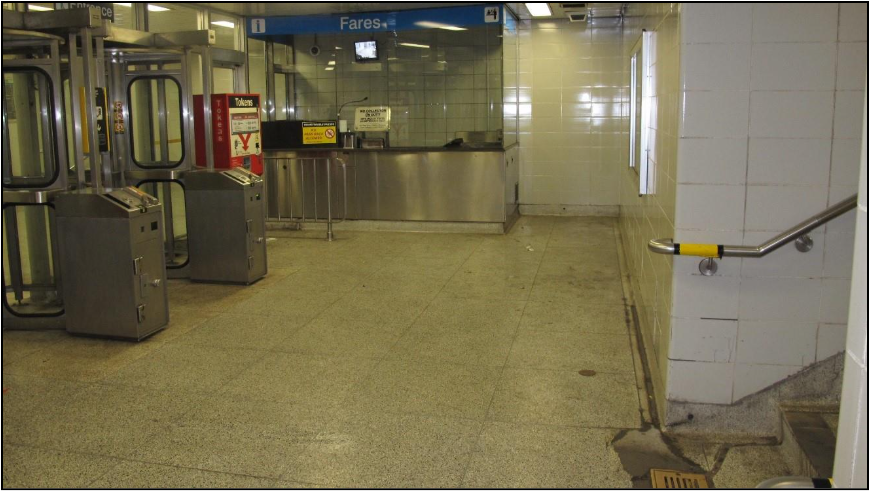
Figure 1: Photograph taken at the mezzanine level of the staircase showing turnstiles at a transit station.
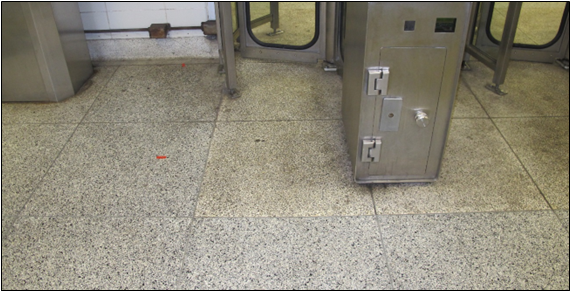
Figure 2: Photograph of the flooring tiles near the turnstiles.
Biomechanical Findings
Video Footage and Surveillance Review
Surveillance footage from CCTV cameras provided an objective record of the events leading up to the fall but only partially captured the passenger’s fall. The footage confirmed that the flooring from the hallway leading to the turnstiles was wet in some areas due to visible reflections. However, multiple passengers had successfully walked through the area without observable or reported balance loss. The incident was only partially captured on video, showing the passenger’s upper body falling forwards onto outstretched hands on the floor, which is incongruent with the known mechanics of slip and falls.
Slip Resistance (Coefficient of Friction) Testing
To assess the slip resistance of the terrazzo tiling of the transit station floor, dynamic coefficient of friction (DCOF) testing was conducted under wet conditions using a BOT 3000E digital tribometer (Figure 3). The results showed that the floor exceeded both industry safety standards under wet conditions (such as those outlined by ANSI and NFSI standards) and exceeded typical human movement requirements during walking. These findings confirmed that the floor was not slippery, even in wet conditions.
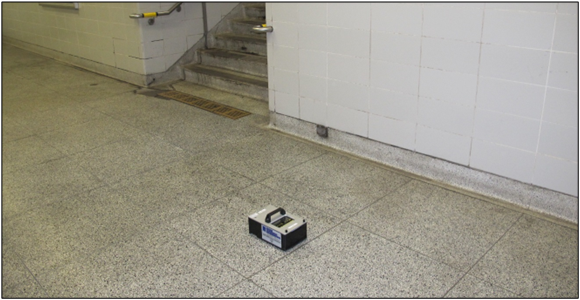
Figure 3: Photograph of our testing device (BOT 3000E) positioned at one of the testing locations approaching the turnstiles.
Biomechanical and Gait Analysis
A detailed biomechanical fall analysis examined the passenger’s reported fall mechanics. Video footage revealed that the passenger fell forward onto outstretched hands (with the lower body blocked from camera view). However, the individual had reported their foot sliding forward when slipping, which does not align with the forward fall onto outstretched hands observed on the video. Slip and falls result in backwards and/or lateral falls, while trip and falls or missteps (errors in movement) result in forward-directed falls. As no trip hazards were found or reported in the incident location, we concluded that the passenger likely misstepped while walking within the transit station.
Conclusion
The combination of biomechanical evidence, slip resistance testing, and surveillance footage indicated that the fall was more likely due to a loss of balance than an unsafe floor surface. CCTV footage showed multiple pedestrians successfully navigate the same area without slipping, ruling out an inherently hazardous condition. Slip resistance testing confirmed that the floor provided sufficient traction when wet, further supporting that the surface did not contribute to the fall. The passenger’s fall mechanics captured on CCTV footage demonstrated that, in the absence of an identified or reported trip hazard, they likely experienced a misstep that resulted in a loss of balance and fall to the ground. These findings highlight the importance of considering environmental and human movement factors when evaluating slip-and-fall claims in public transit environments.
Key Takeaways
Public transit environments present unique biomechanical challenges, where stability depends on pedestrian and passenger movement patterns, flooring, and situational awareness. This case demonstrated that:
What’s Next?
Part 3: Standing Passenger Stability – Why Do People Lose Balance on Public Transit?
Part 1: Injury Risk from Bus Door Closures: A Biomechanical Investigation
The Biomechanics Behind Public Transit Injury Claims: The Series Introduction


