Part 1: Injury Risk from Bus Door Closures: A Biomechanical Investigation
February 27, 2026
February 27, 2026

Public transit doors open and close thousands of times daily, allowing passengers to board and exit safely. However, injury claims related to door impacts are not uncommon. Transit doors are designed with passenger safety and potential for entrapment in mind. So how much force do (and should) transit doors exert, and is it enough to cause tissue injury?
At 30 Forensic Engineering, we use biomechanical analysis to assess whether door impact forces are sufficient to cause tissue damage or joint injuries, or if pre-existing conditions or other factors play a more significant role. These incidents are often captured on surveillance cameras, providing critical visual evidence for injury investigations.
Key Factors in Transit Door Impact Cases
When evaluating transit door-related injuries, several biomechanical variables must be considered:
Case Study: Assessing Injury Potential from a Bus Door Closure
The Incident
A transit passenger reported a shoulder injury after being momentarily caught in a closing bus door while boarding (Figure 1). The individual later underwent rotator cuff surgery and attributed the injury to the force of the door impact.
This case required a biomechanical analysis to determine whether the bus door forces were sufficient to cause acute injury or if pre-existing conditions played a more significant role.
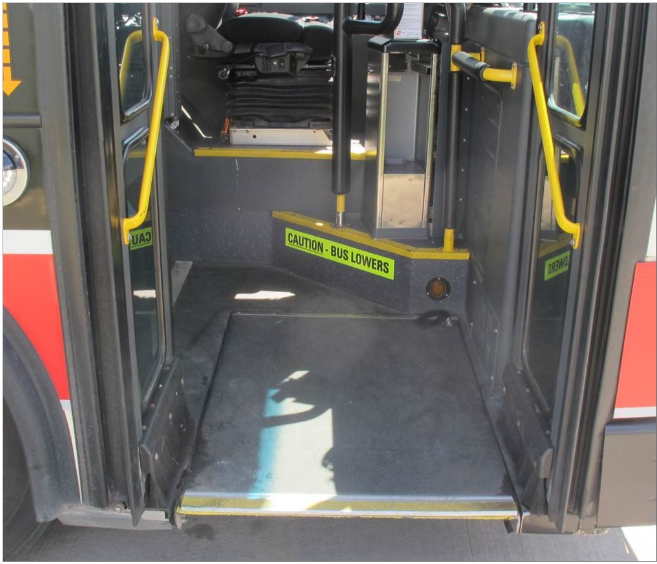
Figure 1: View of the front doors in the open position, as viewed by a user entering the vehicle.
Biomechanical Findings
Door Force Measurement and Comparison
The biomechanical analysis of the bus doors involved measuring the peak compressive force using a calibrated force transducer (Figure 2). The results revealed that the average peak force exerted during closure was approximately 137 Newtons (N). To put this into perspective, a firm handshake generates around 113 N, meaning that the force applied by the bus doors was comparable to a firm handshake and unlikely to cause significant tissue damage or joint injury.

Figure 2: (A) Measurement of individual door panel closing force; (B) Measurement of compressive force between both doors (width = 8 inches); (C) Measurement of compressive force with transducer ‘cupped’ between both hands.
Surveillance Footage and Incident Review
The video evidence assisted in the biomechanical assessment, confirming that the contact between the passenger and the bus doors was brief. The footage showed that the passenger continued moving after the incident, exhibiting no immediate signs of distress or impairment. Furthermore, the bus doors were equipped with rubber moulding along the edges, which helped to absorb impact forces and minimize the likelihood of direct trauma to bony or soft tissue structures. Although the bus operator reported that the doors closed faster than usual, a review of maintenance records indicated no mechanical defects that would have contributed to an unusually forceful closure.
Medical and Scientific Analysis
A review of the provided medical imaging revealed rotator cuff degeneration, including full-thickness supraspinatus tendon tears, tendinosis, and degenerative changes in both shoulders. These findings are consistent with a prolonged fatigue process (i.e., the accumulation of damage over time), not an acute trauma caused by a singular low-force event. Much like a rope that gradually frays over time due to repeated stress, rotator cuff tendons experience progressive weakening from repetitive strain, microtears, and degenerative changes. Eventually, just as a rope may snap after reaching a critical point of deterioration, a degenerative rotator cuff tendon can sustain a full-thickness tear even with minimal force.
Based on established research on rotator cuff pathology, the mechanism of injury should be considered chronic overuse rather than an acute loading event. As a result, the individual’s previous loading history, as documented in medical records (e.g., years spent playing competitive baseball), provides a far more plausible explanation for the reported injuries. Furthermore, the presence of bilateral full-thickness supraspinatus tears and degeneration in both acromioclavicular (AC) joints suggests a multifactorial etiology, where a combination of repetitive overuse and progressive tissue degeneration contributed to their condition.
Conclusion
Based on the biomechanical evidence, medical findings, and surveillance footage, the forces generated by the bus doors were insufficient to cause an acute supraspinatus tear in this individual’s case. Instead, pre-existing shoulder degeneration provided a more plausible explanation for the reported injury. Furthermore, the surveillance footage and biomechanical analysis demonstrated that the mechanics of the incident did not align with the type of force necessary to cause a traumatic rotator cuff injury. This analysis underscores the importance of scientific and data-driven investigations in assessing injury claims related to transit incidents.
Key Takeaways
Bus doors are designed to limit closing force, ensuring passenger safety, when they are functioning properly. While door impacts may feel significant, biomechanical assessments reveal that the forces exerted are often low and unlikely to cause serious injuries – apart from cases where the doors are malfunctioning. A thorough evaluation of door performance, force measurements, anatomical considerations, and medical history helps determine whether a reported injury aligns with the mechanical forces involved or is more likely attributable to pre-existing conditions.
Why Biomechanics Matters in Transit Door Impact Cases
Through scientific testing, video analysis, and forensic expertise, we help transit authorities, insurers, and legal professionals make data-driven, objective decisions when evaluating injury claims, ensuring that each case is assessed precisely and confidently.
What’s Next?
Part 2: The Biomechanics of Slip-and-Fall Incidents in Public Transit Environments
Part 3: Standing Passenger Stability – Why Do People Lose Balance on Public Transit?
The Biomechanics Behind Public Transit Injury Claims: The Series Introduction


